10% off F-ONE and Eleveight gear from CHF 300 with the code Elevatesurf10


Kitefoil: moving from twintip to foil
On Swiss lakes, kitefoiling is not a specialist's discipline: it is often the only way to get on the water at all. Where a twintip needs 15 knots to keep going, a foil takes off at 8 and stays up at 6. On water where the thermal breeze rarely exceeds 12 knots, that does not extend your season slightly — it doubles it. Here is what actually changes when you move from twintip to foil, and the order in which to approach the transition.
What actually changes
The first instinct is to think you are simply swapping one board for another. In practice, three things change at once.
Power is managed differently. On a twintip you absorb gusts with your body and your edge pressure. On a foil, a gust translates immediately into climbing. You steer with your legs, not with the bar: you swallow the gust by flexing, you do not sheet in. This is the point that unsettles experienced kitesurfers the most, because their reflexes work against them.
The kite gets smaller — and above all steadier. A kitefoiler in 10 knots often flies less area than a twintip rider in 20. What matters is no longer raw pull but the kite's ability to stay up through the lulls without falling back in the window. A kite that collapses the moment pressure drops makes foiling unworkable.
The sensation of speed collapses while your actual speed rises. No more chop through your legs, no noise, no vibration. That silence is why most people never go back to a twintip on lakes.
The order to learn in
Kitefoiling is learned cleanly if you agree to separate the difficulties. This sequence works:
- Master the kite without looking, first. If you still need to watch your kite to fly it, it is too early. The foil wants all your attention downwards.
- Ride deliberately underpowered, board flat. The first sessions happen without ever trying to fly: go upwind, come back down, get used to the board pivoting around an axis under your feet.
- Fly low, for a long time. Ten centimetres of flight for thirty seconds is worth more than a metre for two. The goal is a stable flight, not height.
- The turn comes last. The foil jibe arrives once straight-line flight is solid, never before.
Allow three to five sessions if you are a confident kitesurfer, more if you are starting from further back. It is quicker than wingfoiling, because the kite's pull stays constant while you concentrate on your feet.
Which foil to start on
The temptation is to go straight to a race foil, because that is what you see in videos. It is an expensive mistake: a competition foil has a high speed window and forgives very little.
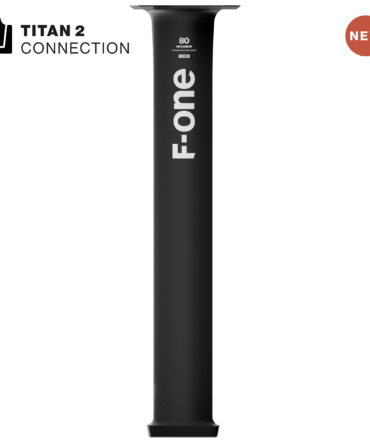
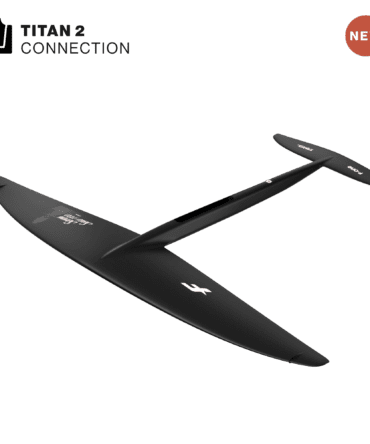
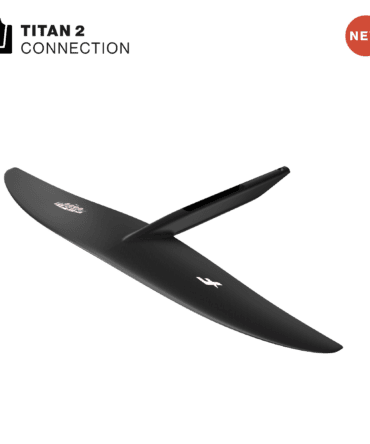
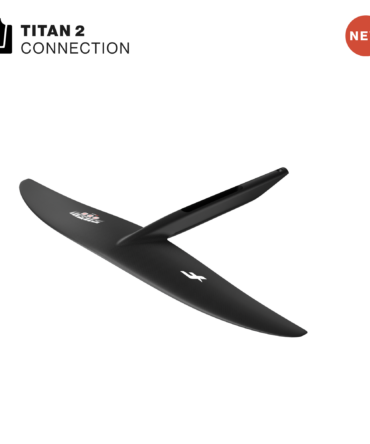
To learn, look for the opposite: a large front wing area, moderate aspect ratio, a short mast. The large area lifts early and flies slowly. The moderate aspect ratio makes the foil docile in pitch. A 70 to 75 cm mast limits how far you fall and makes restarts in shallow water easier. You move to a long mast and a thin profile later, once flight is stable — and at that point you feel the difference immediately.
Our foil range covers both stages, and the front wing can be swapped without changing the rest of the setup: that is precisely the point of a modular system.
Safety, specific to foiling
A foil is a sharp object. Two rules are worth repeating: keep a wide distance from other riders — well beyond what you would on a twintip, because your gear is dangerous underwater and invisible — and climb back onto the board from the rear, never from the side the mast is on. A helmet and a buoyancy aid are basic equipment here, not excessive caution.
On Swiss lakes, remember too that the required distances from scheduled boats and landing stages do not change because you are flying. They are set by canton and stay the same.
Kitefoil or wingfoil?
The question comes up in almost every conversation with our customers. The kitefoil points higher upwind, goes faster and works in less wind. The wing goes to the water in one trip, launches solo from any shore and needs no launch space. Plenty of our customers do both, with the same foil and two boards.
If you are unsure, get in touch. We ride Lake Neuchâtel in the same conditions you do, and we would rather point you towards whatever gets you out most often.