10% off F-ONE and Eleveight gear from CHF 300 with the code Elevatesurf10


Which F-ONE foil to choose? EAGLE, SK8, SEVEN SEAS
EAGLE, EAGLE X, SEVEN SEAS, SK8, JAM, PHANTOM, MOMENTUM: seven front wing families at F-ONE, and a vocabulary that puts people off. This guide places each model, using the manufacturer's own numbers.
First: FW or PLANE?
This is the question that stops half of all buyers, and it takes one sentence to settle.
- FW (Front Wing) means the front wing on its own. You fit it to the fuselage and mast you already have.
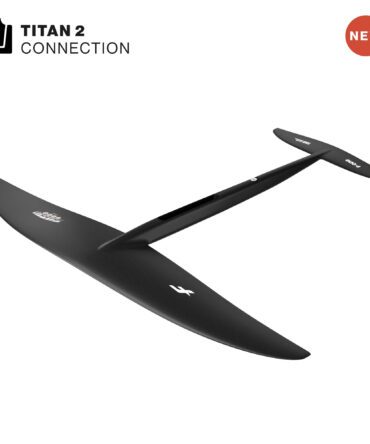
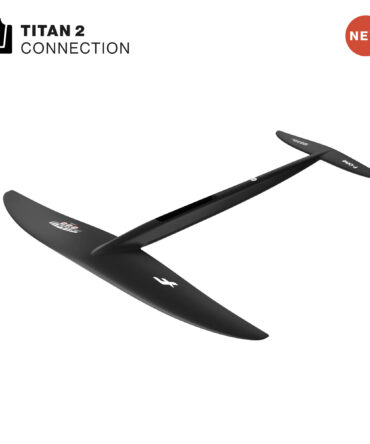
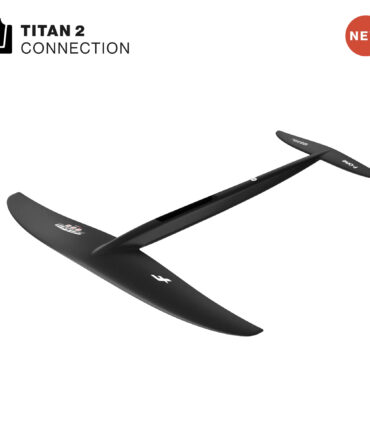
- PLANE means the complete foil: front wing, fuselage and stabiliser, ready to fly.
If you already own an F-ONE foil and want to develop it, buy an FW. If you are starting from nothing, buy a PLANE.
The two numbers that actually matter
A front wing is read through two numbers, and they say different things.
Area, in cm², governs take-off. The larger it is, the earlier and slower you fly. This is the number you choose according to your weight and the wind of the day.
Aspect ratio is the relationship between span and chord. High means speed and a glide that never seems to end, but it asks for finer piloting and forgives less. Moderate turns tighter and reassures.
An EAGLE 890 and an SK8 850 have almost the same area. They fly nothing alike, because their aspect ratios have nothing in common.
The seven families, placed
| Model | For what | Character |
|---|---|---|
| EAGLE | Downwind, long glide | Aspect 9.5 — glide and speed, stays manoeuvrable |
| EAGLE X | Pure downwind | Aspect 12 — the thinnest profile, demanding |
| SEVEN SEAS | Downwind, SUP foil | Aspect 8 — early take-off on the paddle |
| SK8 | Surf foil, carving | Aspect 8 — turns tight, playful |
| JAM | Versatile high-end | Aspect 10.3 — large areas |
| PHANTOM | Pumping, light wind | Aspect 6 — very lifty |
| MOMENTUM | Freeride, pumping | Compact and playful, small areas |
The real numbers of the EAGLE range
Manufacturer data, rarely published in English:
| Size | Area | Span | Aspect ratio | Weight |
|---|---|---|---|---|
| EAGLE 690 | 690 cm² | 82 cm | 9.7 | 0.98 kg |
| EAGLE 890 | 890 cm² | 92.5 cm | 9.6 | 1.21 kg |
| EAGLE 1090 | 1090 cm² | 102 cm | 9.5 | 1.41 kg |
| EAGLE 1290 | 1290 cm² | 110.5 cm | 9.5 | 1.68 kg |
Compare that with the EAGLE X, whose aspect ratio climbs to 12 across areas from 500 to 1000 cm²: same family, opposite philosophy.
Which area for your weight?
There is no universal table — programme and body of water count as much as body weight. As a starting point, for wingfoil:
- Under 70 kg: 690 to 890 cm² as an all-rounder.
- 70 to 85 kg: 890 to 1090 cm², the core of the range.
- Over 85 kg, or light wind: 1090 cm² and above.
Downwind riders go markedly smaller: experienced riders fly 600 to 800 cm² on very thin profiles.
And on our lakes?
Swiss thermals are rarely powerful. On Lake Neuchâtel or Lake Geneva, a wing liftier than the average recommendation will have you flying more often — at the cost of some top speed. It is the advice we give most often in the shop, and the one nobody regrets.
Don't forget the stabiliser
A new front wing is expensive. A new stabiliser costs three to four times less and already transforms the behaviour: a bigger stab steadies and forgives, a smaller one frees the foil. Before investing in a new wing, try a different stab.
In doubt? Come to the shop
We check compatibility with your gear before shipping, and try-outs are possible in Neuchâtel. One phone call often prevents a bad purchase: +41 79 539 53 58.