10% off F-ONE and Eleveight gear from CHF 300 with the code Elevatesurf10



Lake Geneva: spots, winds and rules for wingfoil
Lake Geneva — Lac Léman to its French-speaking neighbours — covers 580 km², stretches 72 km from end to end and is shared between three Swiss cantons (Vaud, Valais, Geneva) and the French shore. For wingfoiling and kitesurfing it is a huge playground. To enjoy it you need two things: an understanding of the lake's very particular winds, and a clear picture of rules that change from one canton to the next.
The winds of Lake Geneva: learn the vocabulary
Nobody here says « southwest at 15 knots ». They say vaudaire, bise, joran. This is not folklore: each name describes a different meteorological mechanism, and therefore a different time window, a different part of the lake and a different level of risk.
The bise (NE)
The most characteristic wind of the basin. It blows from the north-east, often settles in for two or three days, dries the air and clears the sky. It is steady and predictable — but on the north (Vaud) shore it is offshore. At a southwest-facing spot such as Préverenges it arrives over the trees, creates a treacherous wind shadow close to the beach and makes the return leg very hard. Ride the bise where it comes in onshore, never with it at your back.
The vaudaire (SE)
This is the lake's föhn: a south-easterly that funnels down the Rhône valley and hits the Haut-Lac between Villeneuve, Le Bouveret and Vevey. It can build to serious strength and raises a proper chop. It is the wind of big sessions and downwinders — and the one that catches out optimists, because it ramps up fast and dies just as abruptly.
The joran (W to NW)
It pours down off the Jura ridges, usually around a thunderstorm or a frontal passage. Rarer and shorter-lived than the bise, it arrives in dry gusts and can double in strength within minutes. When joran is forecast, size down — or stay ashore.
Bornan and môlan: the storm winds
The bornan comes off the Savoy massifs and strikes the Haut-Lac and Grand-Lac during thunderstorms; the môlan is its equivalent on the Geneva Petit-Lac. Both arrive without warning and can reach storm force. If the sky darkens to the south, go in. That is the simplest and most important rule on this lake.
Thermal breezes: rebat, séchard, morget
In summer, with no synoptic wind in place, the lake generates its own breezes. The rebat is a daytime breeze blowing from open water towards the shore (SE on the Grand-Lac, SW to W on the Haut-Lac). The séchard is a daytime easterly to north-easterly along the axis of the lake. The morget is a night breeze from north-west to north-east between Morges and Rolle. These rarely exceed 12-15 knots: prime territory for big front wings and 5.5 to 7 m² wings.
Where people ride
Vaud shore
- Préverenges — the reference spot of the Lausanne area, facing southwest, with a large car park next to the surf shop and a workable rigging beach. It works on southwesterly depression winds and on thermals; avoid it in a solid bise.
- Morges, Saint-Prex, Buchillon — several launches used by the local community, usually quieter than Préverenges but with tighter access and harbours to keep clear of.
- Vidy and western Lausanne — handy for an after-work thermal session, provided you stay well away from the buoyed swimming areas.
- Villeneuve / Haut-Lac — full-power vaudaire, but the Grangettes reserve (Noville) is a protected area where kitesurfing is prohibited. Know where the line is before you pump up.
Valais shore: Le Bouveret
Le Bouveret is the landmark spot at the top of the lake. You launch from the water sports base between the Rive Bleue campsite and the Stockalper canal. It is a technical spot: the launch area is tight, you often have to walk with the kite in the air, and upwind obstacles generate turbulence. Kiting there calls for an experienced level; beginners should go through a school. A local association (Kitesurfing Valais) manages relations with the authorities and reports on spot conditions — worth checking before you drive over, not least because part of the Haut-Lac reserve is closed from 1 October to 31 March to protect water birds.
Geneva shore: a special case
In the canton of Geneva, kitesurfing is prohibited on lake waters downstream of the Vengeron – Tour-Carrée line, and the shoreline is largely covered by federal water bird and migratory bird reserves. The canton is working with local associations on dedicated corridors, but until those are officially approved and marked, the activity stays tightly constrained. Wingfoiling and windsurfing are possible outside the prohibited zones, with strict hours: daylight and clear weather only, from 8 a.m. at the earliest until 9 p.m. at the latest.
The rules, canton by canton
Kitesurfing has been allowed on Swiss waters since the revision of the federal ordinance, but each canton sets its own restrictions. On Lake Geneva:
- Vaud (regulation 747.23.5, known as « RKite »): riding is allowed on Vaud waters of the lake, but prohibited inside zones marked by yellow buoys and within 100 m of harbours and passenger landing stages; prohibited inside reserves listed in the federal inventory of water bird and migratory bird reserves (Les Grangettes at Noville, Pointe de Promenthoux near Nyon); a minimum distance of 200 m must be kept from scheduled service boats, passenger boats and cargo boats. Municipalities may additionally restrict the shoreline to officially signposted launch and landing corridors.
- Geneva: kitesurfing prohibited downstream of the Vengeron – Tour-Carrée line and near landing stages; hours 8 a.m. to 9 p.m., daylight and clear weather only; a flotation aid is mandatory beyond 300 m from shore; the owner's name and address must be shown on board and wing.
- Valais: activity organised around the Bouveret spot, with the Haut-Lac protected zone closed from 1 October to 31 March and third-party liability insurance required.
In all cases: third-party liability insurance is essential, marked swimming zones are off limits, and municipal corridors override local habits. When in doubt, the lake police and local associations are happy to advise.
What gear suits Lake Geneva?
Most of the time this is a light to moderate wind lake, with powerful spikes when the vaudaire or joran shows up. In practice:
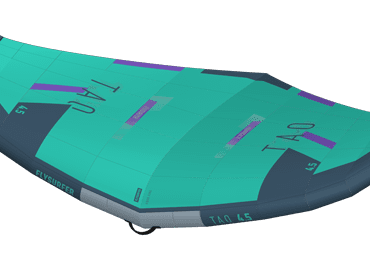
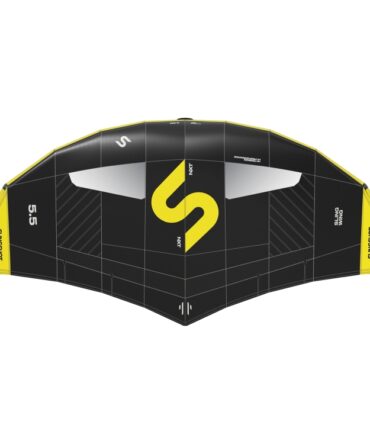
- Wingfoil: two wings cover 90 % of sessions — a big one (6.0 to 7.0 m²) for 10-14 knot thermals, a mid-size (4.5 to 5.0 m²) for established bise and vaudaire. On the foil side, a 1,200 to 1,600 cm² front wing turns marginal days into real sessions, while a 900-1,100 cm² takes over when it blows. Everything is in our wingfoil and foils and masts sections.
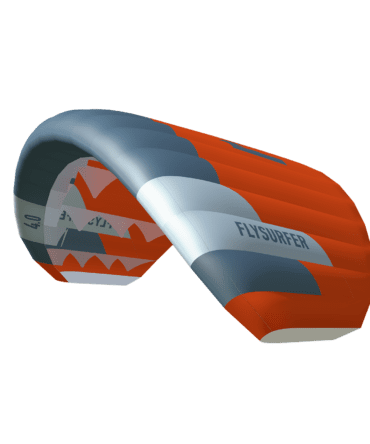
- Kitesurf: the go-to sizes on the lake are 10 and 12 m² on a twintip, 7 to 9 m² on a kitefoil. A light-wind kite or a kitefoil genuinely changes how many days a year you get on the water — see our kites.
- Wetsuit: water at 8-12 °C in spring, 20-23 °C in August. A 4/3 mm full suit covers March to June and September to November; a shorty or top is enough in high summer. Our selection sits in the wetsuits category.
If you are unsure about sizing, our buying guides break down wing, board, mast and stabiliser choice by rider weight and level.
Safety: five reflexes specific to alpine lakes
- Watch the sky to the south and west. A thunderstorm over the Prealps means a possible bornan within the hour.
- Ride with someone, or at the very least tell somebody your zone and your return time.
- Leash and flotation. A board drifting away on a lake 13 km wide is not something you swim after.
- Respect cold water. In April, twenty minutes in the water in a 3/2 mm is enough to wreck your coordination.
- Give CGN passenger boats room. The regulatory 200 m is also a safety margin: a 60-metre vessel will not manoeuvre around a foil.
Want to try before you invest?
We are based in Neuchâtel, an hour from Lake Geneva, and we know both basins well. Drop by the shop to talk gear, wing sizes and a realistic progression plan — or start with a coached session, the best investment you can make in your first ten hours of wingfoiling. Our team also answers by phone and WhatsApp on +41 79 539 53 58.
Official sources
- Vaud regulation 747.23.5 on navigation with kite-towed boards (RKite).
- Canton of Geneva — Paddle, windsurf, wingfoil, parawing and kitesurf.
- MeteoSwiss — The winds of Lake Geneva.
Information verified in August 2026. Authorised zones can change: always check local signage and municipal notices before going out.