10% off F-ONE and Eleveight gear from CHF 300 with the code Elevatesurf10


F-ONE downwind boards: SUP DW, PRO, COMP or FREE DOWNWIND?
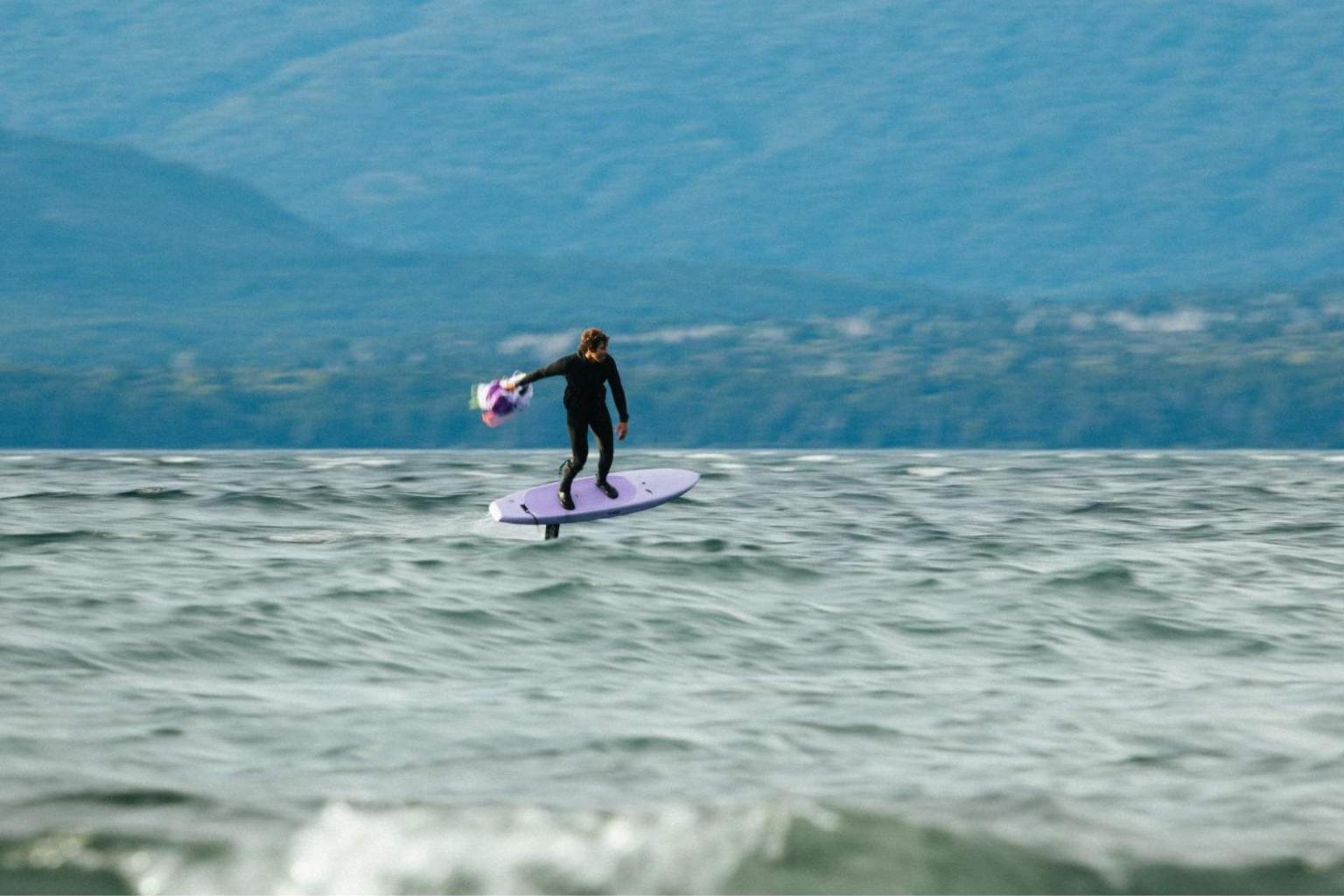
In downwind, the board plays its main role at the start: you need enough speed, by paddling or with a wing, to take off on swell that is often weak. Then you fly from one bump to the next. That is why these boards are long and narrow. F-ONE offers two families: the ROCKET SUP DW, to start by paddling, and the ROCKET FREE DOWNWIND, for pocket wing, parawing and K-Wing.
- 2 familiespaddle (SUP DW) or wing (FREE)
- 6'4 to 8'4longer = more glide at take-off
- 85 to 140 Lvolume stays close to a wing board
- 16 to 22.5″narrower = faster, but less stable
The four F-ONE downwind boards
The bars show F-ONE's ratings for each board (out of 100%). The “take-off beginner” rating clearly shows the difference between the SUP DW and the PRO and COMP versions.

SUP downwind · all levels
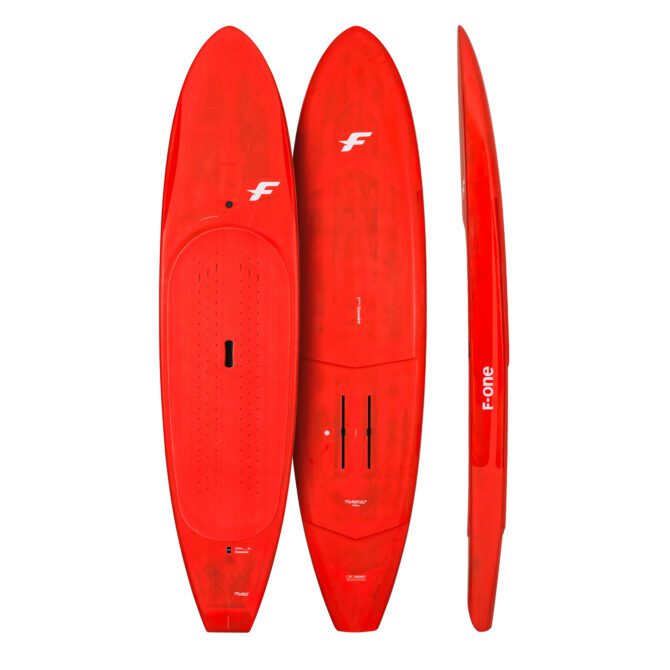
ROCKET SUP DW
The most accessible SUP downwind board. Parallel outline and square rails in the middle for stability, revised nose and bottom for a more forgiving take-off.
- Wide tail kick: pump without dipping the tail
- Two steps to cut drag at take-off
- Ultralight bamboo construction
7'0 – 8'2 · 100 – 140 L · width 19.5 – 22.5″
Take-off beginner70 %
Take-off advanced90 %
Pitch stability100 %
Manoeuvrability60 %
Waves90 %
Downwind100 %
Freeride80 %

SUP downwind · advanced
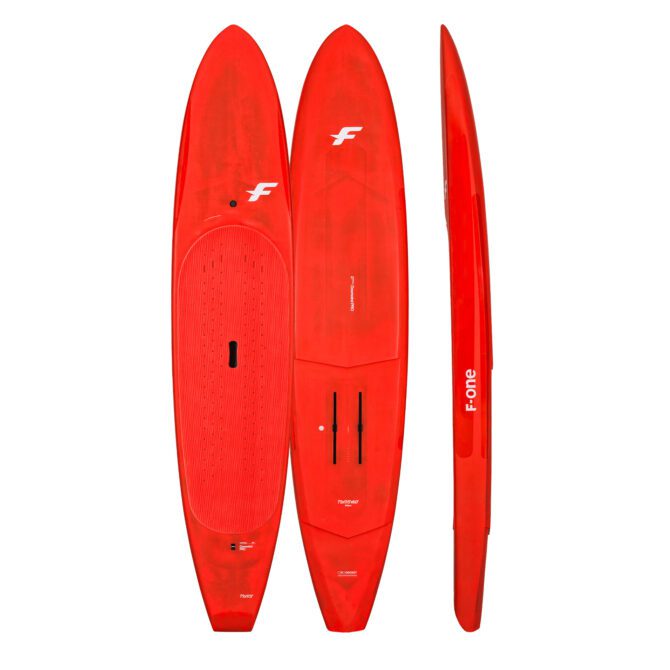
ROCKET SUP DW PRO
The same shape as the SUP DW, but narrower: a little less accessible, in exchange for more speed, more glide and smaller, faster foils.
- For riders already comfortable in downwind
- Carry handle on every size
- In bamboo or carbon (PRO CARBON)
7'0 – 8'2 · 90 – 140 L · width 17 – 20″
Take-off beginner10 %
Take-off advanced100 %
Pitch stability100 %
Manoeuvrability70 %
Waves80 %
Downwind100 %
Freeride80 %

SUP downwind · expert
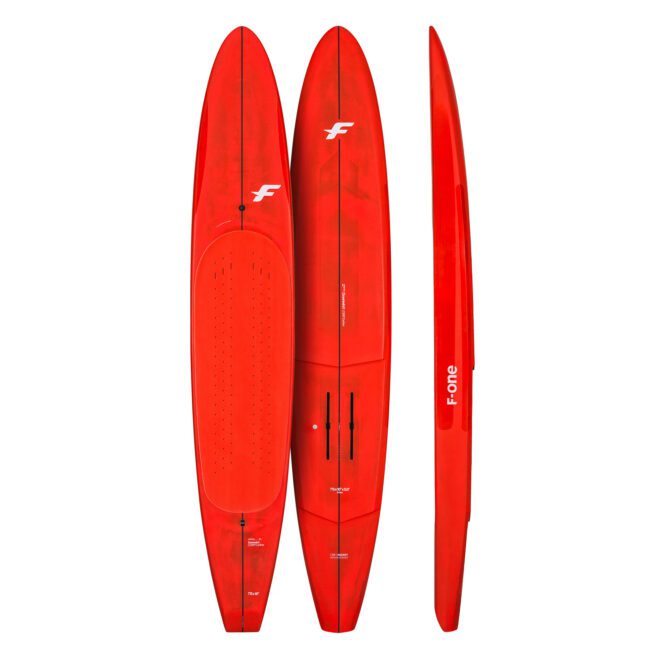
ROCKET SUP DW COMP CARBON
The elite board for long open-water or coastal downwinds: very narrow and stretched, for maximum paddle speed. It demands excellent balance.
- Designed for small foils that need more speed
- Higher kick and double step
- 5.4 to 5.8 kg
7'8 – 8'4 · 97 – 114 L · width 16 – 17.5″
Take-off beginner10 %
Take-off advanced100 %
Pitch stability100 %
Manoeuvrability65 %
Waves50 %
Downwind100 %
Freeride50 %
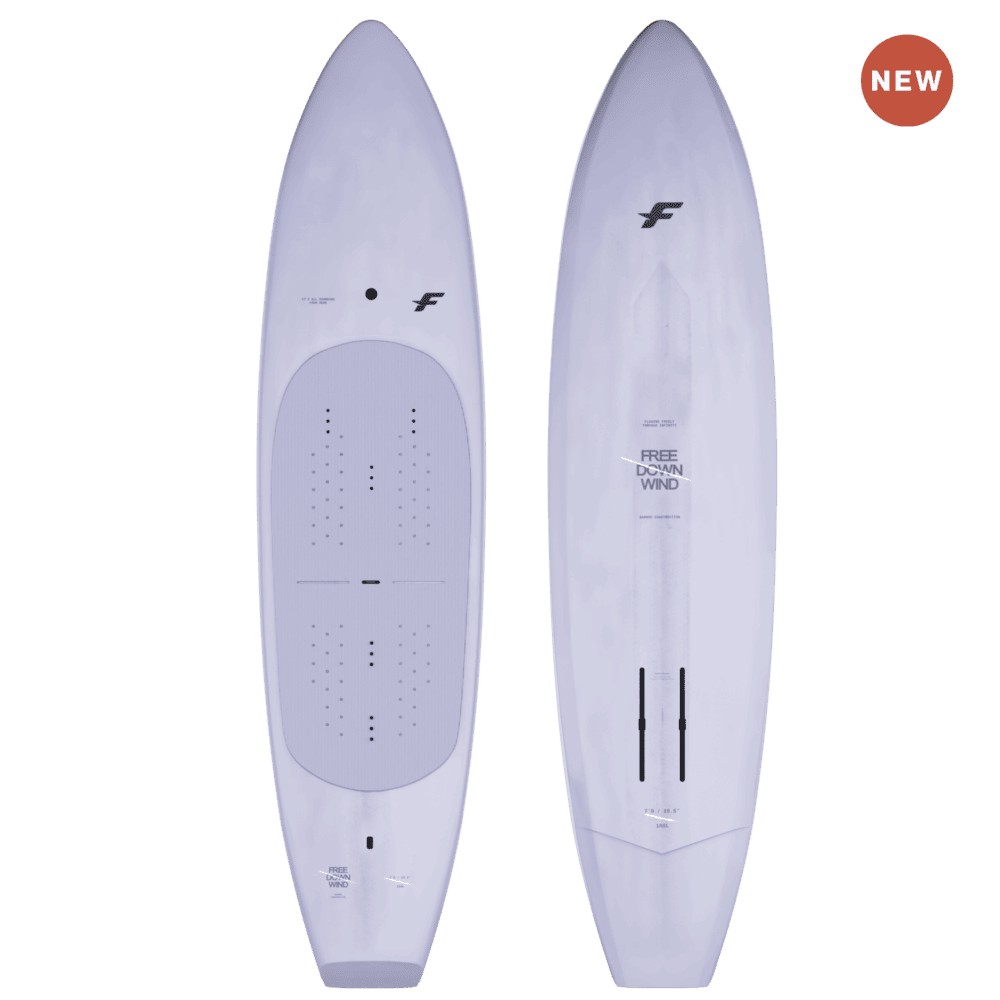
Pocket wing · parawing · K-Wing
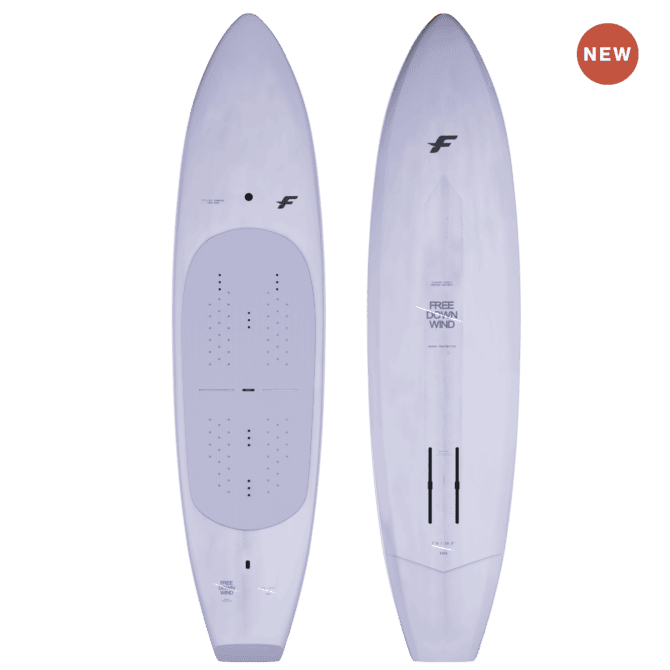
ROCKET FREE DOWNWIND
To take off with a compact wing you stow once you are flying. It takes the balance of the MIDLENGTH, with enough volume to get up even when underpowered.
- More stable than the FREE SURF: wider nose and hull
- Also for SUP foil
- In bamboo or carbon (FREE DOWNWIND CARBON)
6'4 – 7'8 · 85 – 124 L · width 19 – 21″
Take-off beginner70 %
Take-off advanced90 %
Pitch stability90 %
Manoeuvrability80 %
Waves60 %
Downwind100 %
Freeride90 %
On video
Videos: F-ONE.
Sizes, volumes and widths
| Board | Lengths | Volumes | Width |
|---|---|---|---|
| ROCKET SUP DW | 7'0 – 8'2 | 100 – 140 L | 19.5 – 22.5″ |
| ROCKET SUP DW PRO | 7'0 – 8'2 | 90 – 140 L | 17 – 20″ |
| ROCKET SUP DW COMP CARBON | 7'8 – 8'4 | 97 – 114 L | 16 – 17.5″ |
| ROCKET FREE DOWNWIND | 6'4 – 7'8 | 85 – 124 L | 19 – 21″ |
Which one to choose?
- You are discovering paddle downwind: the ROCKET SUP DW, the most stable and forgiving at take-off.
- You already link runs and want more speed: the ROCKET SUP DW PRO.
- Long distances and small foils: the ROCKET SUP DW COMP CARBON.
- You start with a pocket wing or parawing (FRIGATE 2, QUEST): the ROCKET FREE DOWNWIND.
- You want a wing board that also does downwind: the ROCKET WING MIDLENGTH.
Downwind on Swiss lakes
On our lakes the swell is short and the wind often irregular: an easy take-off matters more than top speed. To start, a wider board with a little more volume is the better choice. Our guide to downwind foiling on Swiss lakes covers spots, safety and getting back to the start.
Paddle or wing: two disciplines, two boards
Downwind foiling comes in two forms. With a paddle, you need to paddle fast enough to take off on a bump: the ROCKET SUP DW boards are designed for that paddle glide, with length for speed and width for stability while you prepare. With a compact wing, pocket wing, parawing or K-Wing, the wing provides the power for the start, then you stow it and fly on the swell: that is the ROCKET FREE DOWNWIND's programme.
Start by identifying your main discipline. A board optimised for paddling is not necessarily the easiest for a pocket-wing start, and vice versa. If you are still torn between the two, parawing is often the most accessible way in on our lakes.
Why width matters so much
In downwind, a few centimetres of width change everything at the start. A wide board is more stable side to side, which helps when you are learning to paddle standing up or to get into position before building speed: the SUP DW, at 19.5 to 22.5 inches, favours that accessibility. A narrow board glides better when paddling but forgives fewer balance mistakes: that is the choice of the PRO (17 to 20 inches) and COMP (16 to 17.5 inches).
So do not pick the narrowest board thinking it will be the best performer for you. If you often lose your balance at the start, the extra glide will not make up for the difficulty. The COMP is not the best board in the range, it is the most specialised, for riders who already master paddle starts.
Preparing a downwind on a Swiss lake
A downwind does not end where it starts. Before you go, set your finish point and plan the return: a car left at the finish, a friend to pick you up, or a route along public transport stops. Check how the forecast evolves, because the bise can build or die within a few hours.
On our lakes the bumps are short and irregular, and the shore is not accessible everywhere. Ride with others, take a phone in a waterproof pouch and follow the lake's navigation rules (distance from shore, restricted zones). Our guide to downwind foiling on Swiss lakes covers spots and routes.
Advice before you start?
Tell us your weight, your foiling experience and how you want to start (paddle or wing): we will recommend the board and foil before you buy. Delivery across Switzerland or pick-up in Neuchâtel.
See also: FRIGATE 2 or QUEST: which F-ONE parawing should you choose? and our downwind foil page.